In this post, we bring together what 15 years of scientific research tells us about the phosphogypsum (PG) stack at Kutina — Croatia’s only legacy of this kind, and one of the lesser-known phosphogypsum deposits in Europe.
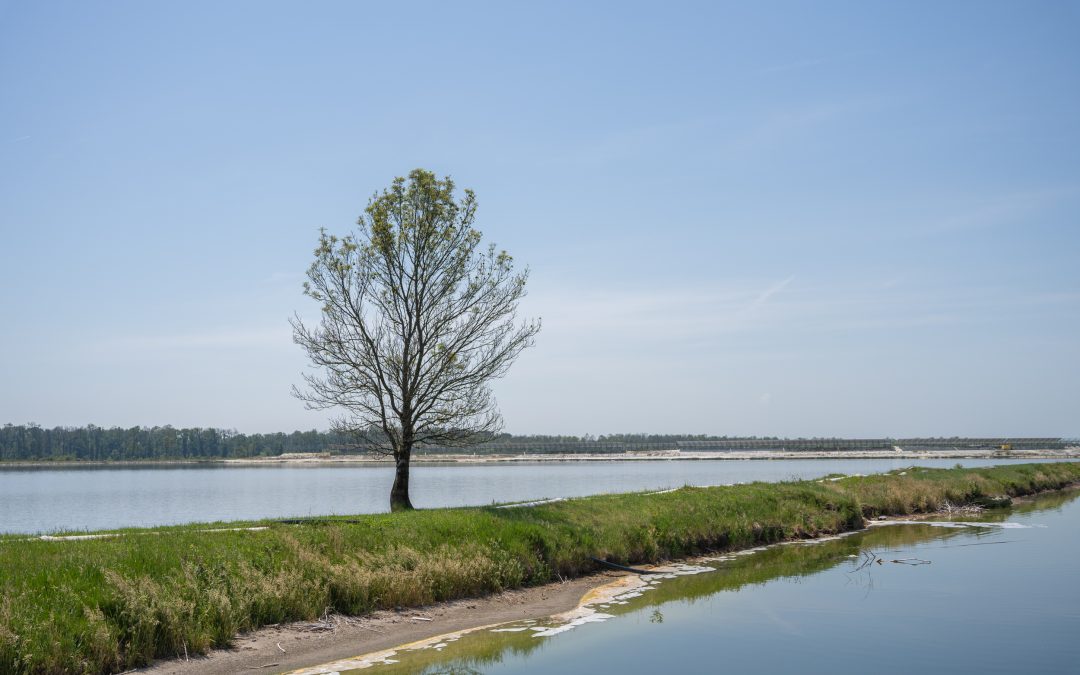


In this post, we bring together what 15 years of scientific research tells us about the phosphogypsum (PG) stack at Kutina — Croatia’s only legacy of this kind, and one of the lesser-known phosphogypsum deposits in Europe.
In this post, we bring together what 15 years of scientific research tells us about the phosphogypsum (PG) stack at Kutina — Croatia’s only legacy of this kind, and one of the lesser-known phosphogypsum deposits in Europe. Between 1983 and 2009, the fertiliser company...
FIC-Fighters’ scientific scaling strategy aims to master CO₂ capture with maximum precision. If you were to visit the pilot plant at the University of Seville, where the valorisation of phosphogypsum (PG) through FIC-Fighters’ NaOH Route is being investigated, the...
How a European project is turning a toxic industrial liability into everyday materials, while capturing CO₂ at the same time. Millions of tonnes of phosphogypsum (internationally known as PG) lie stored in vast open-air stacks across Europe, close to cities and...
These images document the FIC-Fighters field work and community engagement activities in Prahovo and Negotin in Serbia, one of the project’s case studies exploring innovative approaches to phosphogypsum management. The gallery captures field visits to the...
The following images document the field research and community engagement of FIC-Fighters in Kutina, Croatia, one of the case studies where the project explores innovative approaches to phosphogypsum management. The gallery captures field research activities and site...
Intro On 4 March 2026, citizens, environmental advocates, researchers, institutional representatives, and other local stakeholders gathered in Negotin, Serbia, for the FIC-Fighters citizen event. Although the phosphogypsum (PG) stack is located in the nearby little...
Intro On the banks of the Danube River in eastern Serbia, Prahovo is a small industrial town belonging to Negotin municipality shaped by an active large chemical production complex. The local industrial ecosystem is strongly linked to phosphoric acid production and...
The following images document the field work and community engagement FIC-Fighters’ work in Barreiro, Portugal, one of the case studies where the project explores innovative approaches to phosphogypsum management. The gallery captures field research activities, site...
Intro In certain areas across Europe, phosphogypsum (PG) stacks have become enduring landmarks of industrial prosperity—and unresolved environmental risk. From the Danube towns of Prahovo (Serbia) and Turnu Măgurele (Romania), to coastal Cartagena (Spain), and from...
The Prahovo PG stack in Serbia is not an immediate radiation emergency, but it is clearly an environmental hot spot that requires careful management. Some pathways are being tested, like purification by recrystallization, or the ones in FIC-Fighters, to produce usable...