

Intro
Kutina is a town located in central Croatia that grew up around Petrokemija, a fertiliser complex that employed a great part of the community. Linked to its industrial inheritance, a few kilometres south lies a phosphogypsum stack of around 200 hectares that is still undergoing a process of neutralisation. Close by, there is Lonjsko Polje Nature Park, a Ramsar wetland and protected bird habitat connected to the Sava river basin.
In May 2026, around the citizen workshop “Voices for Change: Exploring Solutions for the Kutina Stack”, the FIC-FIGHTERS team visited Kutina and coordinated a Citizen Event with experts and locals to talk about the present and future of Kutina and the nearby stack. The team also recorded interviews with some people who have lived and worked with that industrial inheritance: city officials and residents in Kutina, the scientist who has studied the stack, the geographer who moderated the session, and the project partners who brought the workshop to town. They describe Kutina as a place where industry built the local economy and also left an open question: what to do with the stack. These interviews suggest the answer depends as much on information, trust and participation as it does on chemistry.
The Voice Behind the Case
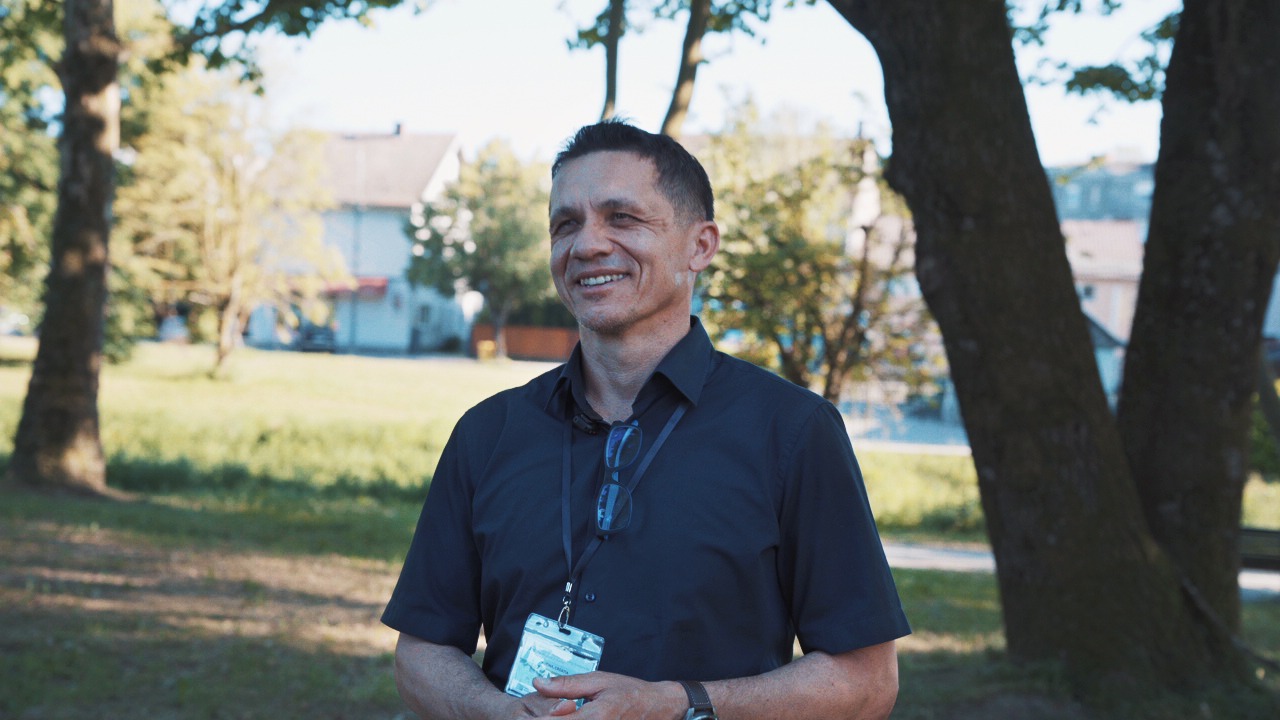
Among the voices are two officials from the city’s department for economy, entrepreneurship and development, one of them born in Kutina and with 30 years of working life that began in Petrokemija; the deputy head of the municipal department for construction and environmental protection, an agronomist who has lived in the town all his life; an associate professor of Geography who moderated the workshop; a researcher from a Croatian scientific institute who advises the project; a professor of metallurgy long linked to industrial production in the region, and the coordinators of the Croatian project partner, PREHNIT.
What unites them is proximity. Nobody in these interviews speaks about phosphogypsum as a distant environmental hot spot. They speak about parents and neighbours who worked at the plant and about a healthy and valuable environment they want their children to be able to walk through.
Key Insights
- The industrial legacy is part of the town’s past. In Kutina, industry is not an outside force, but something part of their everyday life and past. Petrokemija provided work, wages and security for over a generation, and it made this a town of engineers and technical trades, a reputation people here are attached to. What they want for the future is continuity rather than a break: they envision a town that keeps its industrial inheritance alive but also moves into cleaner technologies. In this scenario, the stack belongs to that same story, and its solution is seen as a shared task with Croatia and Europe rather than a local burden.
- The wetland next door is what people care about most. The stack forms a white plain of around 200 hectares beside the protected area of Lonjsko Polje, a Ramsar wetland connected to the Sava river basin. People in Kutina want to see continuous monitoring and reliability among the stack and the surrounding environment, as well as visible results derived from transparent management.
- What they want is information they can rely on. Interest in phosphogypsum here is practical: people want to know what the material is, what can be made from it, and what it means for the land and people around it. Views and reception on that can vary depending on how it reaches the community, as it can be seen as an environmental issue or as a raw material with room for new industry and new jobs. People demand transparent and reliable information to plan their future, and to adjust their current concerns.
- Being asked matters as much as the technical answer. Kutina’s community is open to creating and maintaining a conversation. They want to be asked directly and value a setting where every view counts and where a suggestion for improvement is treated as useful. They see a future in which collaboration and local participation resonate across projects and initiatives not only at a regional level, but also at national and European levels.
Looking Ahead
Asked where they see Kutina heading, the people interviewed converge on one idea: the stack should have a second life ahead of it. The expectation is that research of the kind FIC-FIGHTERS is doing will establish what phosphogypsum can safely become, and that Kutina will be among the places where that is put into practice, with the material feeding construction, chemicals and agriculture instead of sitting behind a fence.
That future is described as a continuation of what Kutina already is. A town of technology that adds cleaner processes to the ones it knows, keeps its technical workforce, and treats the recovered land as an asset. The decisions that make it possible are expected to come from European and national level, which is why several of the people interviewed see the project’s results reaching institutions as the real test of the work.
What they ask of the project in the meantime is concrete. Keep showing what is being done elsewhere, starting with the pilot plant in Spain, and bring the results back to the town. People in Kutina want to keep the conversation open and face challenges and new opportunities together with one idea framed in the horizon: that everyone walking through Lonjsko Polje years from now will have a variety of birdlife to watch and nothing to worry about.
Resources
Full interview on: